Why Anime Storytelling Keeps Winning Over New Fans
Long-form arcs, fearless genre mixing and unforgettable characters — a look at what makes anime so easy to fall in love with.
Beyond the Frame: Why Anime Connects with Us Like Nothing Else
There was a time when admitting you watched anime meant bracing yourself for a puzzled look, followed by the inevitable question: "Isn't that just cartoons for kids?" Today, that misconception has practically dissolved. From packed theater premieres to viral soundtrack trends, anime has firmly planted itself in mainstream global culture. Yet, the secret behind its enduring pull isn’t just flash, hype, or spectacle. At its core, anime thrives because it respects its audience's emotional intelligence. It treats animation not as an adolescent detour, but as an expansive canvas for genuine human drama, unfiltered imagination, and profound aesthetic beauty. To understand why millions of people lose their weekends to these stories, one only needs to look at three defining pillars of the medium: characters who earn their evolution, genres that refuse to stay in their lanes, and visual artistry that speaks louder than words.
Characters that grow
In conventional television, characters often suffer from the sitcom syndrome: no matter what trials they face across twenty episodes, the status quo snaps back into place before the credits roll. Anime, by contrast, treats emotional and psychological change as an inevitable, irreversible cost of living. Because many series are structured around long narrative arcs spanning dozens or even hundreds of episodes, characters are granted the rarest luxury in storytelling: genuine breathing room. Growth is rarely a sudden burst of motivation accompanied by a triumphant musical cue; it is an agonizing, messy process paved with catastrophic failures. We watch young idealists confront realities that shatter their worldviews. Rivals do not simply become friends over a shared joke; they clash, exchange bruises, dissect each other’s philosophies, and arrive at a hard won mutual respect. Mentors are not infallible pillars of ancient wisdom, but worn veterans haunted by past regrets and personal shortcomings. When a hero finally secures a victory after five seasons of physical exhaustion and existential doubt, the payoff resonates deeply. We feel the weight of every lost battle, every scar, and every companion left behind. It is not cheap wish fulfillment; it is the universal human struggle rendered through heightened stakes.
Genre without limits
Western entertainment loves tidy categorization. When you browse a catalog, you generally know whether you are stepping into a courtroom procedural, a slapstick comedy, or a dystopian thriller. Anime, however, views genre boundaries not as walls to stay behind, but as suggestions waiting to be dismantled. A single series can seamlessly begin as a sun drenched high school comedy about awkward crushes, swerve into an intense psychological dissection of grief, and culminate in an explosive supernatural thriller, all without losing its narrative spine. Where else could you find a high stakes, sweat inducing drama about competitive volleyball, a poignant historical saga about the trauma of war, or a philosophical meditation on identity wrapped inside a futuristic cyberpunk neo noir? This total disregard for formula gives the medium an exhilarating unpredictability. It trusts that human emotion is multifaceted. In real life, tragedy and absurdity often exist in the exact same hour, and anime captures that chaotic truth by refusing to fit neatly onto a single shelf. The moment you think you have solved a show's narrative compass, it pulls the rug out and takes you somewhere entirely unexpected.
Art as storytelling
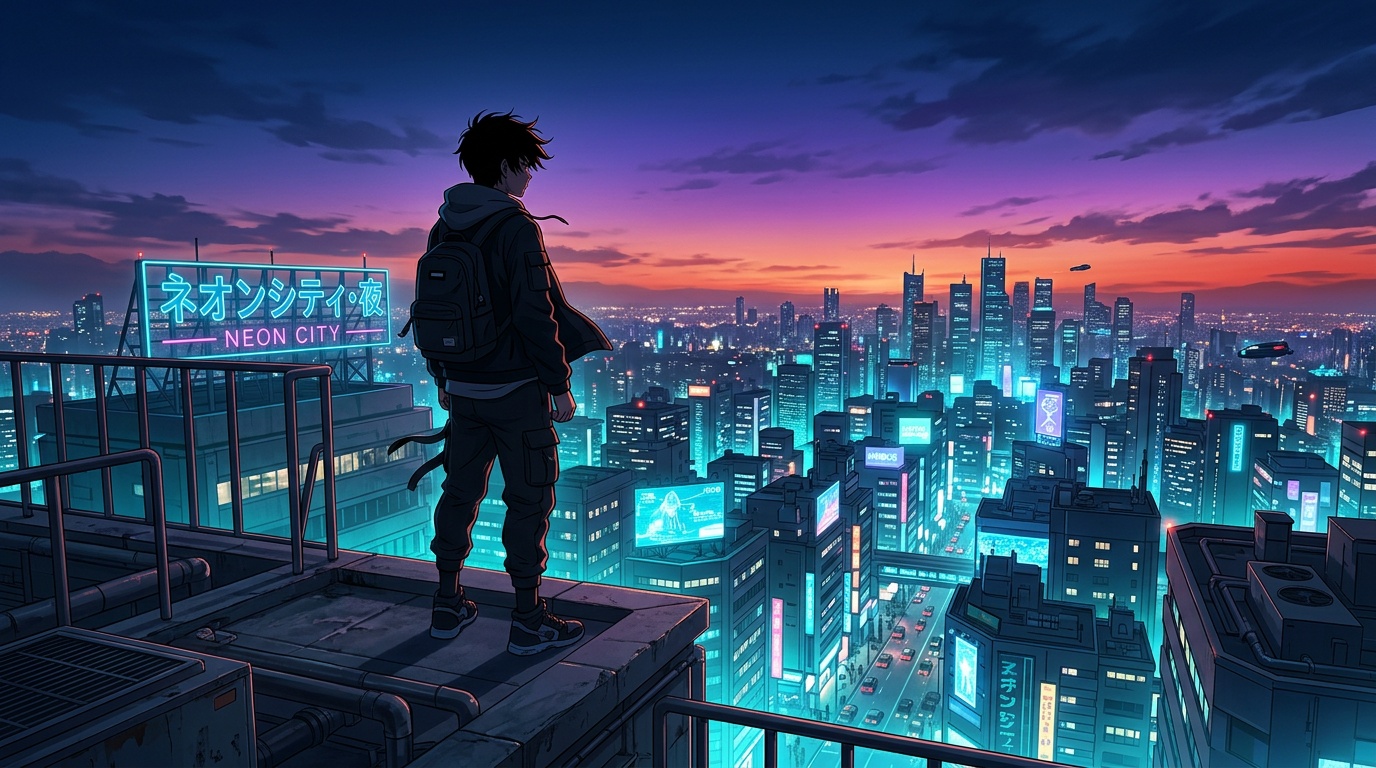
It is easy to focus on dialogue when evaluating great writing, but anime remembers that film is fundamentally a visual language. In the hands of visionary directors and animators, every stroke of the brush, shift in lighting, and deliberate frame carries thematic weight. Consider how much narrative occurs in complete silence. A character’s descent into isolation isn’t always announced through an emotional soliloquy; often, it is communicated through a lingering wide shot that leaves them marooned in the lower corner of an empty train station, dwarfed by looming shadows. A quiet shift from soft pastels to harsh, saturated neon can signal a loss of innocence far more effectively than exposition ever could. From the meticulously painted, wind swept pastoral landscapes of traditional cinema to the kinetic, rule breaking visual distortion of modern action sequences, visual style serves the story rather than merely decorating it. A quiet sunset reflected on a wet pavement, the slow flutter of a curtain, or the sudden loss of line detail in a moment of utter shock can say far more than an entire script of spoken prose.
The Lasting Impression
Ultimately, anime’s global resonance comes down to sincerity. In a media landscape that often relies on cynical detachment or recycled nostalgia, anime leans entirely into earnest passion, existential wonder, and vulnerable storytelling. It reminds us that no emotion is too big to explore, no narrative rule is unbreakable, and animation, when wielded with vision, can reflect the human condition with breathtaking power.